Self-study: Leading your church to growth
Here is something which I've picked up for my personal study. It seems to be a good tips for you too, in the growth of your church and ministries.
 The pastor / lay leader (whatever position you are holding) must be a possibility thinker. Gloomy pastors / lay leaders etc subject to depression and defeat are not usually growth pastors / lay leaders. If the candidate is overly critical, a negative thinker or a non-thinker*, and prone to bring out what is wrong rather than what is right about a given situation you have a yellow light: caution.
Possibility thinkers know how to run problems into opportunities. They usually relate well to others because they themselves have sufficiently high self-esteem. Faith sets the direction, possibility thinking discovers creative ways of getting the job done.
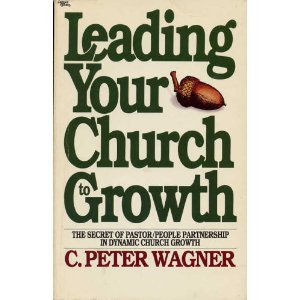
Citation: C. Peter Wagner, Leading your church to growth (Regal Books), p. 170.
Non-thinker means a person whose decision making shows an complete absence of common sense and or intelligence, but shows an abundance of ignorance and stupidity.
Possibility thinkers know how to run problems into opportunities. They usually relate well to others because they themselves have sufficiently high self-esteem. Faith sets the direction, possibility thinking discovers creative ways of getting the job done.
Citation: C. Peter Wagner, Leading your church to growth (Regal Books), p. 170.
Non-thinker means a person whose decision making shows an complete absence of common sense and or intelligence, but shows an abundance of ignorance and stupidity.
Points for us to consider:
- Am I a possibility thinker, a negative thinker or a non-thinker?
- What should I do in order to be a better thinker?
- Have I recognized possibility thinkers in my church?
- Should I or should I not relate with this or these possibility thinkers? Why should I and why shouldn't I?
Key learning points:
- Possibility thinking is an asset. Such thinking ability can be cultivated through much brain exercises. Also, we can learn from other possibility thinkers. This may be a slow learning process for some of us, however, if we value progress, we will receive wisdom from them.
- Possibility thinkers know how to run problems into opportunities. Instead of putting on negative 'lens', such thinkers see opportunities behind every problems. This is because, to them, problem equals to progress. Their attitude is always, "What can I learn through this moment?""How do I walk through this 'storm' victoriously and having to gain new insight and wisdom?"
In closing for today's lesson, I would like to share what Jamie Paolinetti said, "Limitations live only in our minds. But if we use our imaginations, our possibilities become limitless."


Comments
Post a Comment